Yes. A normal hormone panel does not rule out perimenopause, and for most women it was never going to.
There is a note on her phone she has been adding to since February. It has no title. It is just a list, long enough now that she has to scroll.
Woke at two. Awake until four. Woke at two again. Forgot the word invoice in a meeting. Heart pounding at my desk for no reason. Cried in the car in the parking garage. Forgot invoice again. I'm angry. I'm so angry at everyone.
Nowhere on that list is the word perimenopause. She is 46 and nobody has said it to her.
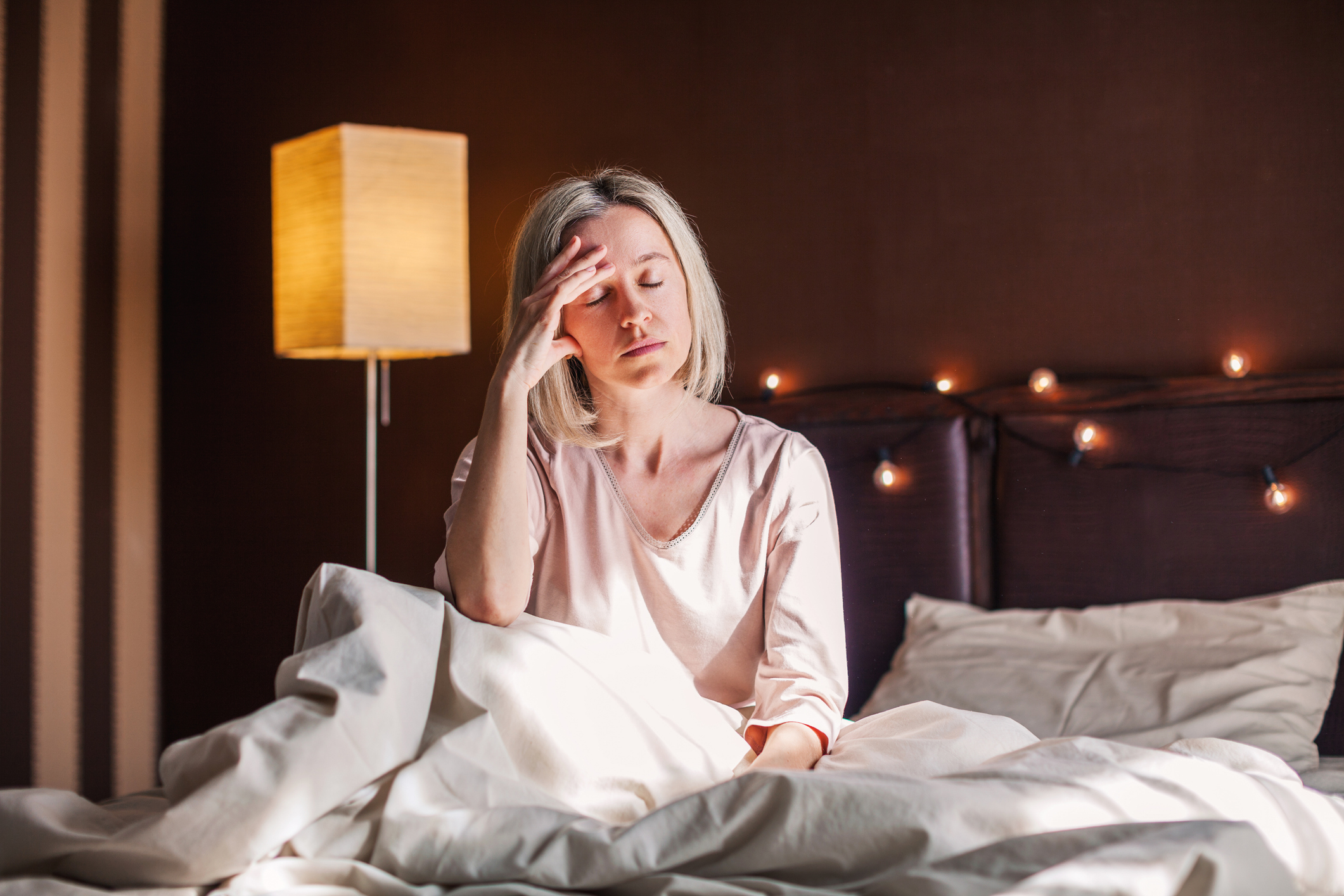
She got promoted fourteen months ago — the job she had worked toward her whole career — and somewhere in that year she stopped sleeping through the night. Now she does the maths every night. It's 2:14. The alarm is at six. That's three hours and forty-six minutes if I fall asleep right now. She never falls asleep right now. Then she gets up and does the whole day anyway, and she still does it well. It just costs three times what it used to.
Eventually she takes the list to her doctor and scrolls through it in the exam room. They run her labs. Four days later there is one line in the portal.
Your hormone levels are within normal limits.
It is that one word — normal — that does the damage. She decides the problem is her. She does not open the note again for a long time.
She is not one woman. She is a version of a story we hear constantly with the details changed.
Why does the hormone test come back normal?
Because a blood draw is a snapshot, and perimenopause is a moving target.
Menopause is a single moment in time: the day you have gone 365 days without a period. Everything before it is perimenopause, and during that stretch oestrogen and progesterone stop behaving predictably. They rise and fall in ways that are no longer cyclical in the way they used to be.
So a panel drawn on a Tuesday morning can sit comfortably inside a normal range while you are living inside a swing that is taking you apart. The number was accurate. It just wasn't the answer to the question you asked.
This is why clinical guidance leans on age, cycle history and symptoms rather than on a single hormone test. It isn't that the test is wrong. It's that one measurement cannot show a pattern, and the pattern is the thing.
Does perimenopause affect anxiety and mood?
Yes, and it is often the part that arrives first and gets recognised last.
Oestrogen and progesterone act on the systems that regulate mood and sleep — serotonin, dopamine, GABA. When those hormones become unpredictable, so does everything downstream of them.
Women describe it less as sadness and more as a loss of margin. The buffer between what happens and how you react gets thinner. You find yourself flipping out at people you love, in situations where you would never have lost your temper before. Anxiety that suddenly feels much louder. Waking at three already anxious. Words that won't come. A sense of being a stranger to yourself.
And here is the part that matters clinically: what tracks with depressive symptoms in this season isn't how low your oestrogen goes. It's how much it moves. Research following women who had never been depressed found that what predicted depressive symptoms was variability around each woman's own average, not the absolute level. Later work has found the same pattern — greater oestradiol variability predicting greater depressive symptoms, particularly for women also carrying significant life stress.
Which is precisely why a single normal reading tells you so little.
It's also worth knowing what gets talked about versus what actually lands. When Oova surveyed women going through perimenopause about which symptoms affected their lives most, anxiety, mood changes and sleep disturbance came in the top five. Hot flashes and night sweats — the two everyone associates with menopause — were near the bottom. (Oova's own survey of its users, not a peer-reviewed study.)
How long does this go on?
Longer than most women are told.
In the Study of Women's Health Across the Nation, the median total duration of frequent hot flashes and night sweats was 7.4 years. For Black women it was 10.1 years, the longest of any group in the study.
That is not a phase to get through. That is a stretch of life — often the same stretch that holds the biggest job you have ever had, teenagers, and ageing parents.
Why do we know so little about this?
Because of something more ordinary than a conspiracy, which is sometimes worse.
When researchers design a women's health study, they screen for a clean sample — women with regular cycles, not in transition, with intact anatomy. But a woman in perimenopause is, by definition, irregular. So she is excluded. And a postmenopausal woman has no cycle at all, so she is excluded too.
The result is a genuine gap in what we know about this period of life — including how medications prescribed to women in midlife actually behave across it.
Should I see a doctor or a therapist?
Usually both, and not in a particular order.
A gynaecologist, primary care clinician or menopause specialist can assess the physical picture and rule out the things that overlap and mimic — thyroid problems, anaemia, sleep disorders, medication effects. A therapist who understands midlife can work on the anxiety, the sleep and the identity shift regardless of how much of it is hormonal.
If the anxiety or low mood is substantial, or medication is worth discussing, a clinician who works at the intersection — women's or reproductive psychiatry — is particularly useful.
On antidepressants specifically: an SSRI is one tool. Not the only one, and not a verdict on you. It can work like a bridge holding your hand while you get through the season — restoring enough access to your own coping that the other things become possible again. That is a real and reasonable use of it, and it is a conversation to have rather than a failure to avoid.
What actually helps
CBT-I, for the sleep. Cognitive behavioural therapy for insomnia is a six-to-eight-session protocol with no medication in it. In a randomised trial of 150 postmenopausal women with chronic insomnia, 54% of those who did CBT-I were in remission at the end of treatment — and 68% at six months, after the sessions had stopped. It kept working after it ended.
CBT, for the anxiety. How thoughts drive what you feel and do. How to interrupt a worry cycle at two in the morning. How to have some compassion for yourself in a season when you feel out of control.
Changing the rhythm, not just enduring it. The nine-to-five was not designed around anybody's internal clock, and it is certainly not designed around yours right now. If you are awake from three to six, you need sleep and it may have to come from six to ten. Where can the day bend?
Asking for more help, out loud. With the children. With the work. An honest conversation with your partner about what intimacy looks like in this season. These are interventions, not admissions.
The one step, and you can start it tonight
Perimenopause is diagnosed on a pattern of symptoms, not a lab value. Which means the thing that changes the conversation is a record.
Sixty to ninety days. Bleeding. Sleep. Mood. The two a.m. wakings. The days you can't find words. The rage days. Roughly where your cycle sits in each one.
Most women in this season are already keeping some version of that list somewhere. Nobody has ever told them it's data.
So she opened the note again, and she gave it a title. The second time she went in, she didn't say I don't feel like myself. She handed over her phone. Here are ninety days. Here's what my sleep has done. Here are the days I can't find words. Here are the four days a month I can't be around my own family.
Same woman. Same body. Probably the same labs. Completely different conversation.
If you have already been keeping the list, you are further along than you think.
At Mamaya we measure every woman's progress every session. Of the women who came to us with clinically elevated symptoms, about seven in ten reached a point where they were no longer in the clinical range — and more than half of the improvement we measure lands in the first four weeks.
Where the science runs out
This is a field where a lot of people are selling certainty, so it's worth being clear about the edges.
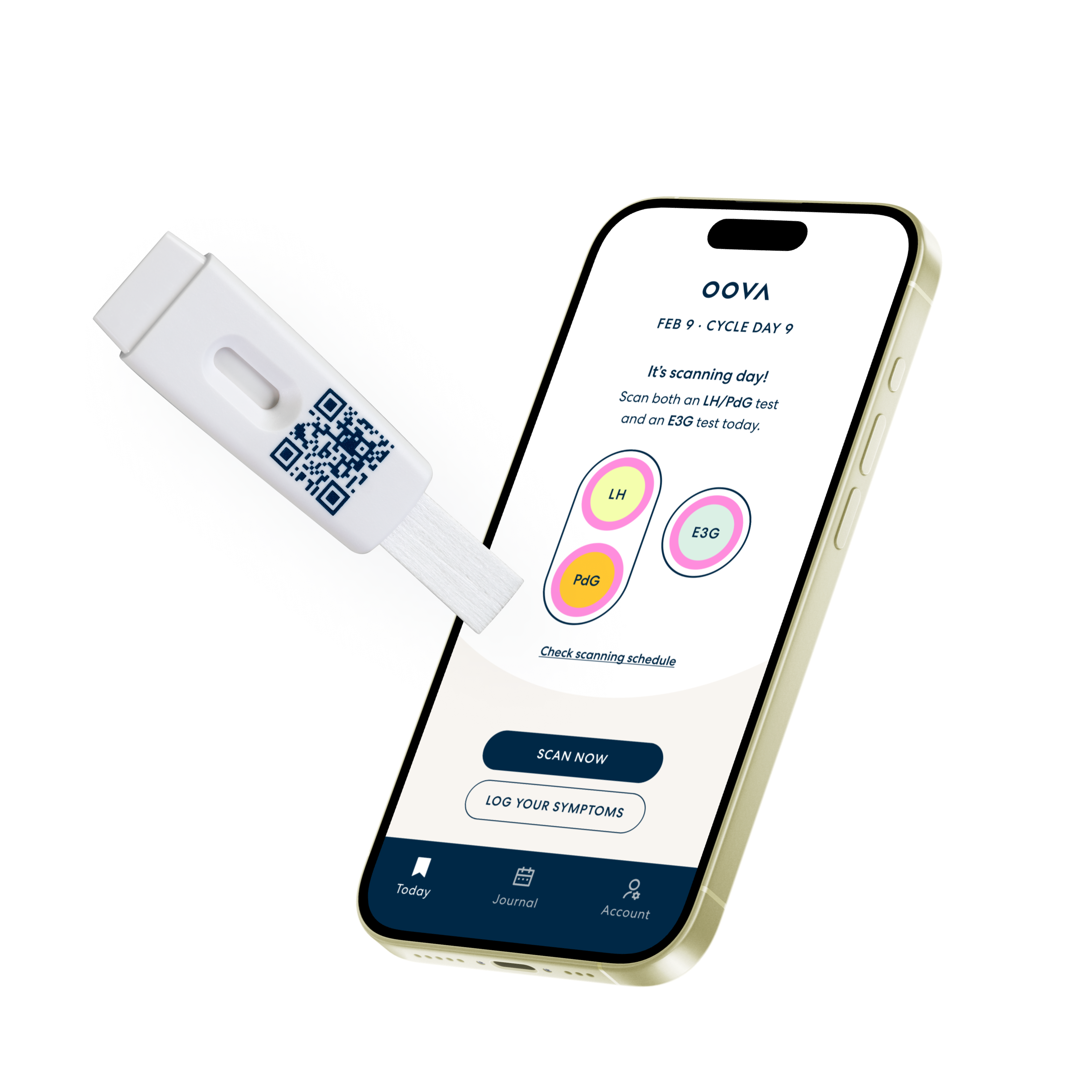
Measuring a woman against her own baseline rather than a population average is the right design, and the research supports it. What has not been shown yet is that at-home hormone tracking changes an outcome. That is a legitimate place for a technology to be — early, promising, honest about itself. It is not the same as proven, and anyone telling you otherwise is selling something.
We would rather tell you that than have you find out later.
Frequently asked
Could this be perimenopause if my labs came back normal?
Yes. Perimenopause is generally identified from age, cycle history and symptoms rather than a single hormone panel. Levels fluctuate substantially during the transition, so one blood draw can look unremarkable on a day you feel terrible.
Does perimenopause affect anxiety and mood?
Yes. Mood changes are a recognised part of the transition. Women describe anxiety that suddenly feels louder, irritability out of proportion, waking at three already anxious, brain fog, and not feeling like themselves. Sleep disruption amplifies all of it.
Should I see a doctor or a therapist?
Usually both. A medical clinician can assess the physical picture and rule out overlapping causes. A therapist who understands midlife can work on anxiety, sleep and the identity change regardless of how much is hormonal.
What do I say when I book the appointment?
I'm in my forties, I don't feel like myself, and my labs came back normal. I'd like to be evaluated for perimenopause as well as other medical and mental health causes, and I want to talk about treatment. Ask whether they have experience treating perimenopause, rather than asking for more hormone testing.
How long does perimenopause last?
It varies. In the SWAN study the median duration of frequent vasomotor symptoms was 7.4 years overall and 10.1 years for Black women.
Where can I get perimenopause mental health support in Nashville?
Mamaya offers therapy and psychiatric medication management specialising in women's mental health, in person in Nashville and Murfreesboro and by telehealth across Tennessee, Texas and Florida. Vanderbilt's menopause clinic provides medical management, and several Nashville practices specialise in women's reproductive mental health.
If you need support right now
You don't have to wait for a crisis to ask for help. If you are in one:
- 988 — Suicide & Crisis Lifeline, call or text, 24/7
- 1-833-852-6262 — National Maternal Mental Health Hotline, call or text, 24/7
- Text HOME to 741741 — Crisis Text Line
If you or someone else is in immediate danger, call 911.
Sources
- Avis NE, Crawford SL, Greendale G, et al. Duration of menopausal vasomotor symptoms over the menopause transition. JAMA Internal Medicine. 2015;175(4):531–539. (SWAN)
- Drake CL, Kalmbach DA, Arnedt JT, et al. Treating chronic insomnia in postmenopausal women: a randomized clinical trial comparing CBT-I, sleep restriction therapy, and sleep hygiene education. Sleep. 2019;42(2):zsy217.
- Freeman EW, Sammel MD, Lin H, Nelson DB. Associations of hormones and menopausal status with depressed mood in women with no history of depression. Archives of General Psychiatry. 2006;63(4):375–382. (Penn Ovarian Aging Study)
- Gordon JL, Rubinow DR, Eisenlohr-Moul TA, Leserman J, Girdler SS. Estradiol variability, stressful life events and the emergence of depressive symptomatology during the menopause transition. Menopause. 2016;23(3):257–266.
- Symptom ranking: Oova user survey. Not peer-reviewed; attributed as such in the text.
Common questions
- Could this be perimenopause if my labs came back normal?
- Yes. Perimenopause is generally identified from age, cycle history and symptoms rather than a single hormone panel. Levels fluctuate substantially during the transition, so one blood draw can look unremarkable on a day you feel terrible.
- Does perimenopause affect anxiety and mood?
- Yes. Mood changes are a recognised part of the transition. Women describe anxiety that suddenly feels louder, irritability out of proportion, waking at three already anxious, brain fog, and not feeling like themselves. Sleep disruption amplifies all of it.
- Should I see a doctor or a therapist?
- Usually both. A medical clinician can assess the physical picture and rule out overlapping causes. A therapist who understands midlife can work on anxiety, sleep and the identity change regardless of how much is hormonal.
- What do I say when I book the appointment?
- Say: I'm in my forties, I don't feel like myself, and my labs came back normal. I'd like to be evaluated for perimenopause as well as other medical and mental health causes, and I want to talk about treatment. Ask whether they have experience treating perimenopause, rather than asking for more hormone testing.
- How long does perimenopause last?
- It varies. In the SWAN study the median duration of frequent vasomotor symptoms was 7.4 years overall and 10.1 years for Black women.
- Where can I get perimenopause mental health support in Nashville?
- Mamaya offers therapy and psychiatric medication management specialising in women's mental health, in person in Nashville and Murfreesboro and by telehealth across Tennessee, Texas and Florida. Vanderbilt's menopause clinic provides medical management, and several Nashville practices specialise in women's reproductive mental health.