Yes. In most routine outpatient visits you can decline to be weighed, or ask to be weighed without seeing the number.
Weight is a data point, not a requirement, and a routine visit is rarely the moment it has to be collected. There are exceptions — medication dosing, pregnancy care, anesthesia, and monitoring certain conditions — and in those situations the number genuinely matters. But we always do it is a habit, not a clinical necessity, and you are allowed to ask.
Here is language that works, and that most front-desk staff and nurses have heard before:
"I'd rather not be weighed today unless it's needed for something specific."
If it is needed:
"That's fine — please don't say the number out loud, and don't put it on my after-visit summary."
That is called a blind weigh. You step on facing backwards, the number goes in your chart, and nobody reads it to you in a hallway. It is a completely normal request.
You do not owe anyone an explanation. I'd rather not today is a complete sentence.
One important exception
If you are in treatment for an eating disorder, this is a conversation with your care team rather than a decision to make from a blog post. The evidence-based protocols in that setting often lean toward open weighing, and it is genuinely unsettled among clinicians. What I'm describing here is your ordinary appointments.
What does a scale actually measure?
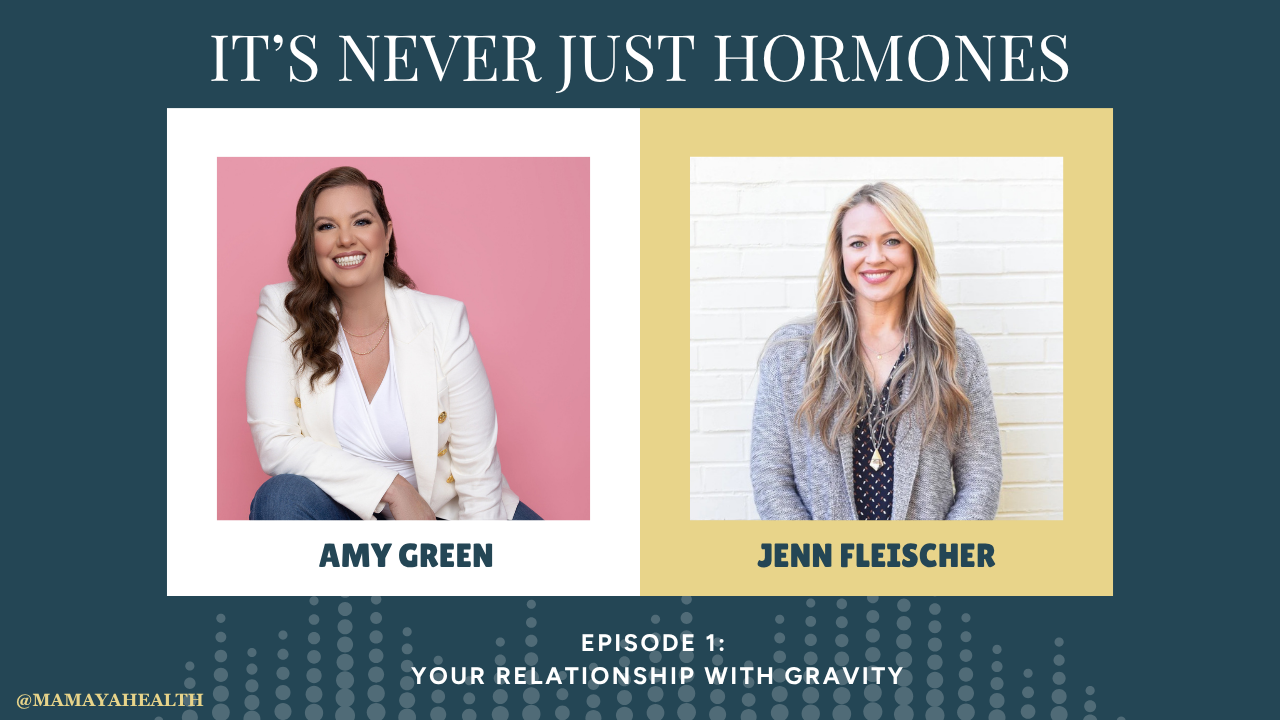
This is where the first episode of It's Never Just Hormones starts, and the answer from dietitian Jenn Fleischer, MS, RDN, LDN, CDCES is the line that named the episode:
"Weight on a scale is your relationship with gravity in that moment."
That's it. That's what it measures. How hard your body is being pulled toward the earth at the moment you stepped on.
It does not distinguish between muscle and fat. It does not know how much water you are holding, where you are in your cycle, what you ate last night, whether you slept, or whether you are inflamed from a workout or a long flight. It cannot see your blood pressure, your blood sugar, your strength, your energy, or whether you can carry your kid up the stairs.
A number that moves four pounds between Tuesday and Thursday has not told you anything about your health. It has told you about gravity, and salt, and time of day.
If you're in the postpartum year, the hormone timeline explains a lot of what the scale can't.
Why the moment matters more than the number
Most of us are weighed at the very start of an appointment — before anyone has asked why we came.
That order does something. It sets the frame of the visit before the visit begins, and for a lot of women it means the next twenty minutes get filtered through a number collected before anyone knew what was wrong. Symptoms that deserve investigation get a weight-loss recommendation attached to them instead.
Declining the weigh-in is not about avoidance. It's about deciding what the appointment is going to be about — and it's one of the few parts of a medical visit you actually control.
"That's not your voice. It's somebody else's."
The other thing Jenn says in this episode, and the one that has stayed with listeners. The commentary that runs in your head when you catch sight of yourself — the one that narrates what you should look like and what you should have gotten done — was learned. It came from a classroom that told you when you were allowed to eat. From a magazine. From a relative. From a doctor who said something in passing and never thought about it again.
Not one thing you believe about your body came with the body.
Naming that voice as not yours is a small move, and it's the one that makes the rest possible. You cannot negotiate with something you think is you.
Where body neutrality actually begins
Not at love. That's the mistake that makes people give up in week one.
It begins somewhere much smaller and much more doable: this is the body that got me here. Neutral. Factual. No celebration required.
From there the useful questions stop being about appearance and start being about function. Do I have energy? Am I sleeping? Can I do the things my life asks of me? Those questions have answers you can act on. The scale does not.
Body image shifts differently in each season — see how we organise care across the eight seasons of a woman's life.
Listen to the full conversation
Episode one — Your Relationship With Gravity, with Jenn Fleischer, MS, RDN, LDN, CDCES, owner and co-founder of Nashville Nutrition Partners.
We get into how school teaches us to override hunger and thirst, what that costs thirty years later, the oxygen-mask problem, and the long, quiet work of learning to trust your own body's signals again.
Listen → · Apple Podcasts · Spotify · iHeart
If this is close to home
This piece and the episode discuss body image and dieting. If any of it is difficult right now, these are free and confidential:
National Alliance for Eating Disorders Helpline — 1-866-662-1235 · allianceforeatingdisorders.com
If you are in crisis: call or text 988, any time.
Common questions
- Can I refuse to be weighed at the doctor's office?
- Yes. In most routine outpatient visits you can decline to be weighed, or ask to be weighed without seeing the number. Weight is a data point, not a requirement, and a routine visit is rarely the moment it has to be collected. There are exceptions — medication dosing, pregnancy care, anesthesia, and monitoring certain conditions — but 'we always do it' is a habit, not a clinical necessity.
- What does a scale actually measure?
- Weight on a scale is your relationship with gravity in that moment. That's it. It does not distinguish between muscle and fat, does not know where you are in your cycle, and cannot see your blood pressure, blood sugar, strength, or energy. A number that moves four pounds between Tuesday and Thursday has not told you anything about your health.
- Where does body neutrality begin?
- Not at love — that's the mistake that makes people give up in week one. It begins somewhere much smaller: 'this is the body that got me here.' Neutral. Factual. No celebration required. From there the useful questions stop being about appearance and start being about function.