
Brain fog, word-finding problems, and the feeling that your thinking has slipped can come from stress, burnout, the normal process of aging, or hormonal changes — and in women between 35 and 55, they often come from more than one at the same time. Sorting out which is driving what is the first step to actually getting better.
You can't find the word you're looking for. Again. You walk into a room and forget why. You read the same paragraph three times and none of it sticks. You're in a meeting and you feel like you're watching it rather than in it — present, but not quite there.
You've started wondering if something is seriously wrong with you. Or maybe you've landed on "this is just what getting older feels like." Or maybe you're convinced it's burnout — because you are, truly, exhausted.
Here's the truth: it might be several of these things at once. Or one of them disguised as another. The only way to start sorting it out is to understand what's actually driving the fog.
The four possibilities — and how to tell them apart
| Cause | Core feature | Clue it's this |
|---|---|---|
| Stress | Elevated cortisol impairs working memory and concentration while the stressor is active | Gets better when the stressor lifts; worsens during high-demand periods |
| Burnout | Exhaustion that rest doesn't fix; emotional detachment; reduced sense of meaning | Rest doesn't help; you feel flat or cynical in a way that is new for you |
| Aging | Gradual, decade-scale slowing in processing speed | Changes are very slow; sudden or distressing cognitive shift points elsewhere |
| Hormonal shift (perimenopause) | Fluctuating estrogen disrupts memory, processing, and executive function | Tracks your cycle; began in late 30s or 40s; sleep disruption and mood changes alongside |
How stress affects your brain
When your body is in a prolonged stress response, cortisol levels remain elevated — and chronically high cortisol impairs working memory, concentration, and emotional regulation. If you've been running on adrenaline for months or years, your brain has been quietly paying the toll.
The key marker of stress-driven cognitive impairment is that it tracks the stressor. When the pressure eases, the fog eases with it. If it doesn't, you may be dealing with something else on top.
What makes burnout different from stress
Burnout is chronic, unresolved stress — but it looks different. It's characterized by exhaustion that rest doesn't fix, a growing cynicism or emotional detachment, and a reduced sense of accomplishment or meaning. Burnout affects cognitive function and can look a great deal like depression.
The practical difference: stress is "too much." Burnout is "nothing left." A vacation restores someone with stress exhaustion. The person with burnout comes back from vacation and feels the same by Wednesday.
Why aging alone rarely explains sudden changes
Aging does affect cognition over time — but not in the dramatic, sudden way that many women experience in their late thirties and forties. If the changes feel recent, noticeable, and distressing, age is rarely the complete explanation. Cognitive decline from normal aging is gradual and slow, and doesn't cause the acute word-finding failures or working-memory drops that women in perimenopause describe.
If the change felt like something arriving rather than something building, age is worth ruling out rather than defaulting to.
How hormonal shifts affect thinking and mood
Hormonal shifts — specifically the estrogen fluctuations of perimenopause — are one of the most underrecognized causes of cognitive changes in women. Estrogen supports memory, processing speed, and executive function. During perimenopause, which can begin years or even a decade before your last period, estrogen levels become increasingly erratic. The result can include brain fog, word-finding difficulties, difficulty concentrating, and a general sense that your cognition has slipped.
This is also when many women receive their first ADHD diagnosis. Hormonal changes can unmask or amplify executive function challenges that were previously easier to manage — which is why the symptoms can feel like they arrived out of nowhere in your forties. We've written more about that here: How Hormones Impact ADHD Symptoms in Women.
What makes perimenopause-related cognitive symptoms particularly hard to catch is that a standard hormone panel often comes back normal. Estrogen fluctuates so substantially during this transition that a blood draw on a good day can look completely unremarkable. A pattern over time is more informative than a single snapshot — and we've written separately about what to do when your labs come back normal but something still feels wrong.
How to start getting clarity
The first step is tracking. When are your more challenging cognitive days? What point in your cycle are you in? Is there a discernible pattern? These observations matter more than you might think — perimenopause is diagnosed on a pattern of symptoms, not a lab value.
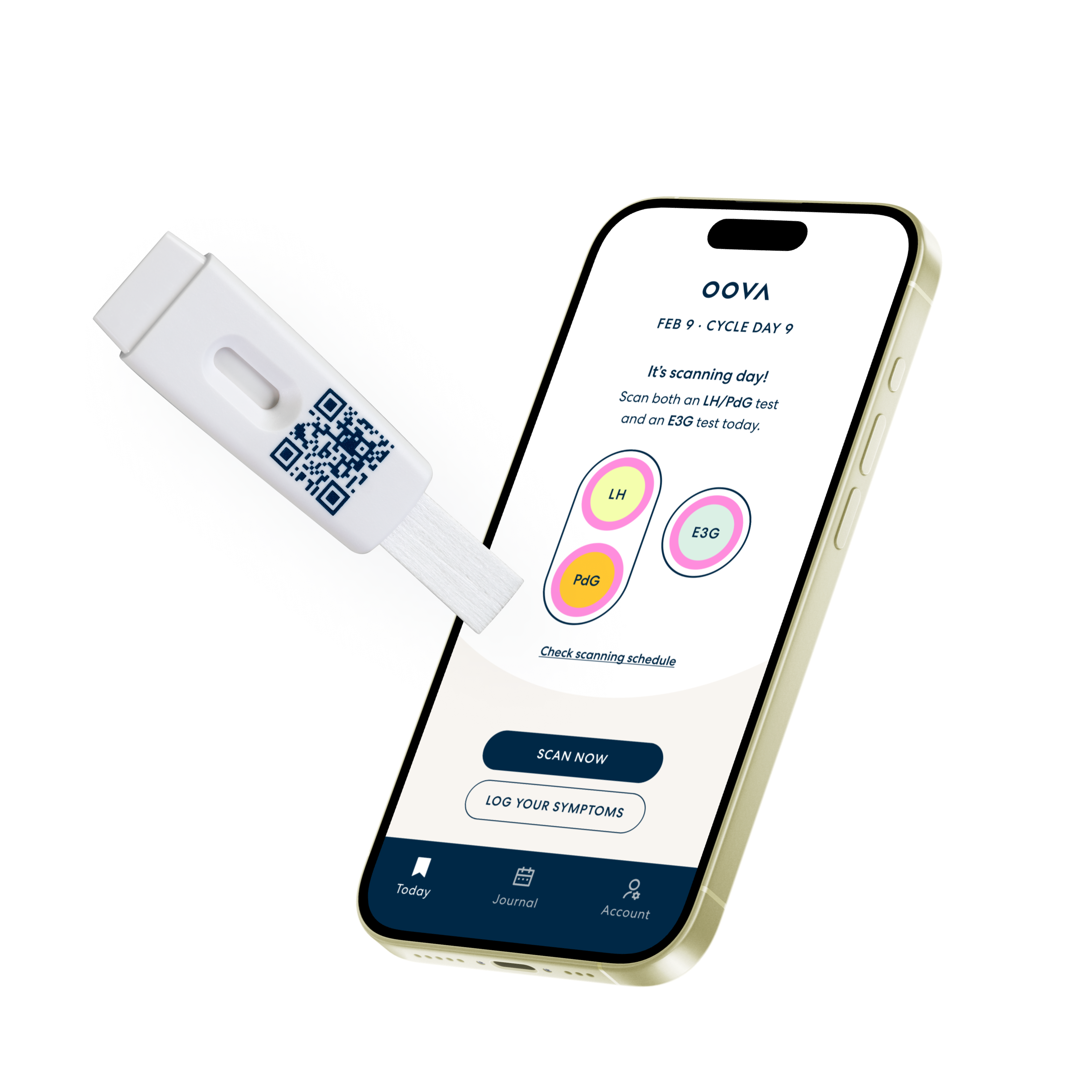
The second step is data. Oova's daily hormone testing shows you what your hormones are actually doing across your cycle — including when and how they fluctuate. If you notice your brain fog peaks when progesterone drops or estrogen spikes, that's not a coincidence. That's information your care team can use.
The third step is care designed for the whole picture. Mamaya Health's clinicians work at the intersection of hormonal change and mental health. We understand that brain fog, mood changes, and cognitive shifts in women often have a hormonal component — and we know that the answer is rarely "try harder" or "manage your stress better."
You deserve clarity — not more confusion
The reason so many women spend years undiagnosed or misdiagnosed is that the healthcare system tends to treat symptoms in isolation — anxiety here, sleep issues there, cognitive changes somewhere else. But for women, especially during hormonal transitions, these symptoms are often part of the same picture.
Mamaya Health and Oova exist to put that picture together. To give you the data, the clinical expertise, and the compassionate support to finally understand what's happening in your body and your brain — and to do something meaningful about it.
You're not losing your mind. You're navigating a complex hormonal landscape without a map. We'd like to give you one.
If you need support right now
You don't have to wait for a crisis to ask for help. If you are in one:
- 988 — Suicide & Crisis Lifeline, call or text, 24/7
- 1-833-852-6262 — National Maternal Mental Health Hotline, call or text, 24/7
- Text HOME to 741741 — Crisis Text Line
If you or someone else is in immediate danger, call 911.
Common questions
- How do I know if my brain fog is hormonal or from stress?
- The most useful indicator is whether the fog tracks your cycle. If cognitive symptoms worsen at specific points in the month — around ovulation, or in the week before your period — that cyclical pattern points toward hormonal involvement. Stress-related brain fog tends to track the stressor rather than the calendar.
- Can perimenopause cause brain fog and memory problems?
- Yes. Estrogen supports memory, processing speed, and executive function. During perimenopause, as estrogen levels become erratic, word-finding difficulties, concentration problems, and a general cognitive slippage are common — and often among the first symptoms to appear, before hot flashes or cycle changes.
- What is the difference between stress and burnout?
- Stress is characterized by too much — too many demands, too much pressure. Burnout is characterized by depletion — the sense that there is nothing left. The key clinical difference is that rest helps stress but does not reliably restore burnout. Burnout also typically includes emotional detachment and a reduced sense of meaning that ordinary stress does not.
- When should I see a doctor for brain fog?
- If cognitive symptoms are new, distressing, or getting worse — especially if they arrived suddenly rather than gradually — they warrant evaluation. A clinician can rule out thyroid dysfunction, anemia, sleep disorders, medication effects, and other medical causes. If you are in your late thirties or forties, ask specifically about perimenopause.
- Where can I get support for hormonal mental health in Nashville?
- Mamaya Health offers therapy and psychiatric medication management specializing in women's mental health, with in-person offices in Nashville and Murfreesboro and telehealth across Tennessee, Texas, and Florida. To get started, visit mamayahealth.com.