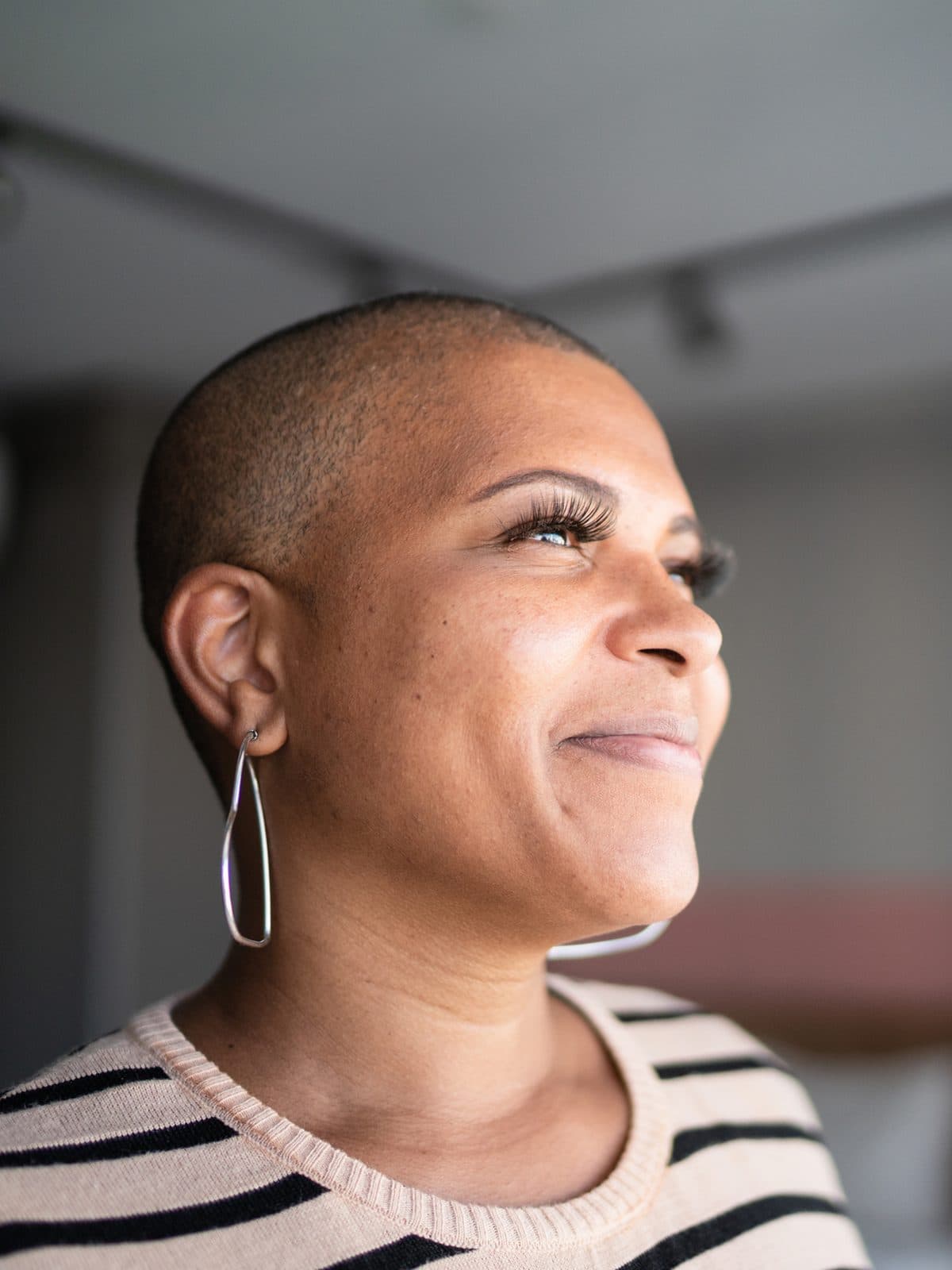
You are not broken.You are becoming.
A 7-module mental health program for women navigating the postpartum chapter — the rage, the grief, the identity shift, the relationship changes, and the nervous system dysregulation that most postpartum care leaves unnamed. Clinician-built, research-grounded, and honest about what you’re actually going through.

Still pregnant? Get Becoming free with Expecting.
Buy Expecting, and Becoming opens on its own two weeks before your due date — so it's ready before your baby arrives.
You feel like a stranger in your own life. The person you were before the baby feels far away, and you’re not sure who you’re becoming.
You have thoughts you’re ashamed of — rage, ambivalence, the occasional wish that you could disappear for a few hours. You haven’t said them out loud to anyone.
You know something is off, but you keep telling yourself it’s “just hormones” or that you should be grateful. You’ve passed the 6-week checkup and no one has asked how you actually are.
Sleep is impossible. Your body feels unfamiliar. Your relationship is strained in ways you don’t have language for yet.
You love your baby and you are also grieving — for your old self, your old freedom, your old body, your old relationship — and you don’t know if that grief is allowed.
Your nervous system is running on empty. You’re snapping at people you love, and then feeling terrible about it, in a loop you can’t exit.
You’re trying to hold everything together while someone depends on you for everything — and you’re not sure what you’re running on.
You want to be present for this. You’re struggling to get there.
None of this makes you a bad mother. All of it makes you a human being navigating one of the most significant neurological, hormonal, and identity transformations of your life — with almost no real support.
new mothers experience postpartum depression — making the postpartum period the most common time for a woman’s first or returning depressive episode.
of postpartum women experience postpartum rage. It is the most underdiagnosed postpartum symptom — because no one talks about it, and because anger in new mothers is still taboo.
months for a full postpartum recovery — not the 6-week clearance your OB gave you. Brain remodeling, hormonal recalibration, and identity rebuilding take the entire first year.
Estrogen drops by a factor of 100 in the 24–72 hours after birth. Serotonin shifts by up to 50%. Your brain is remodeling — what neuroscientists call matrescence. What feels like losing yourself is, in part, your nervous system adapting to the most significant relationship of your life. We teach you to understand it, not fight it.
Rage. Ambivalence. Intrusive thoughts. Grief for the self you left behind. These are common, documented, and completely manageable — when someone finally names them, explains their neurobiology, and gives you real tools. This program does all three.
Your nervous system is not failing — it’s responding to genuine depletion. We draw on polyvagal theory and somatic approaches to give you 2-minute regulation tools that work with a baby in your arms, a toddler at your feet, and a brain that hasn’t had a full night’s sleep in months.
PPD, PPA, postpartum OCD, postpartum rage, postpartum PTSD — all covered, all destigmatized, all distinguished. EPDS screening-informed and designed to help you know when what you’re experiencing is clinical, and when you need more than a program.
The neuroscience your postpartum appointments skip — the hormonal cliff after birth (estrogen drops by a factor of 100 in 24–72 hours), brain remodeling, serotonin shifts, and the full postpartum mood disorder spectrum. Includes the EPDS screening framework, self-advocacy scripts for clinical appointments, and the foundational reframe: you are not broken, you are transformed.
The science of the first 12 weeks — sleep deprivation neurobiology, physical recovery timelines, and why bonding builds gradually over months, not in a single overwhelming moment. Includes the partner sleep-protection framework, breastfeeding realities, and evidence-based tools for the transition no one prepares you for.
Permission to feel the full postpartum emotional spectrum — rage, grief, ambivalence, intrusive thoughts. We cover the neurobiology of postpartum rage (present in 20–50% of new mothers), distinguish ego-dystonic intrusive thoughts from intent, name maternal ambivalence without shame, and give you a somatic toolkit: EFT tapping, shaking/TRE, bilateral tapping, the physiological sigh.
Matrescence is the identity reorganization of becoming a mother — one of the largest transitions a person undergoes. We draw on Mercer's maternal identity research and Ibarra's identity-through-action framework to help you hold grief for who you were alongside curiosity about who you are becoming. Includes micro-practices for protecting and reclaiming a non-mother self.
The neurobiology of partnership in the postpartum period — oxytocin redirected to the infant, dopamine rewiring, resentment cycles, desire changes. Gottman Method repair bids, reflective listening scripts, and tools for naming needs before they become resentments. Includes a section for single mothers and co-parenting arrangements.
Polyvagal theory in plain language — dorsal vagal, sympathetic, ventral vagal — and 2-minute regulation practices you can actually use with a baby in your arms. Breathwork (physiological sigh, box breathing, extended exhale), 5-4-3-2-1 grounding, somatic shaking, habit-stacking for nourishment and movement, and building your personal regulation menu.
Asking for specific help without guilt, knowing when to escalate, and building a long-term mental health plan before you need one. The four types of postpartum support, the specific-ask framework (not “let me know if you need anything”), warning signs escalation (green/yellow/orange/red), EPDS self-monitoring schedule, and crisis resources. Because social support reduces postpartum depression risk by 20–25% — and most women don’t build it until they’re already struggling.
All seven modules unlock the moment you enroll — work at whatever pace this season allows.
“To arrive at the end of the first postpartum year knowing yourself better than when you started — and knowing you are not broken.”
Most postpartum care focuses entirely on the physical — and ends at six weeks. Becoming is the mental health layer: the tools, the frameworks, and the honest conversations that prepare you for everything the first year actually asks of you.
6–8 minutes each, filmed by Amy direct-to-camera with warmth and clinical depth. Work through them at whatever pace this season allows — nap time, after bedtime, whenever you find a minute.
Somatic and mindfulness practices adapted specifically for the postpartum body — body scans, nervous system settling, progressive muscle relaxation, and breathing practices that work even when you’re exhausted.
Three structured prompts per module to process what you’re learning at depth. Not homework — tools for the moments when you want to go deeper than the video alone.
Module 7 builds your plan before you need it — escalation warning signs, who to call, what specific support looks like for you, and how to ask for it. A living document, not a one-time exercise.
You’ll have access to all content while your subscription is active. Cancel when you’re ready — and re-subscribe for $49/month if a new season or a second baby brings new need.
Becoming was developed by Mamaya Health’s clinical team — licensed therapists and perinatal mental health specialists (PMH-C) who work daily with postpartum women. Every module is grounded in peer-reviewed perinatal psychology research, ACOG guidelines, and evidence-based frameworks including CBT, ACT, somatic experiencing, and polyvagal theory.
This isn’t a substitute for therapy or medical care. If you’re in crisis or need a licensed perinatal clinician, we can match you one-on-one — start intake here. If you are experiencing a mental health emergency, contact the 988 Suicide & Crisis Lifeline, the Postpartum Support International helpline at 1-800-944-4773, or the Crisis Text Line at 741741.
Peer-led support groups are free and open to everyone — no program enrollment required. Our moderated online community is available to clients enrolled in any Mamaya program or support group, a place to be understood between and beyond your sessions.
Browse the free support groupsInstant access to all modules, guided meditations, and workbook PDFs. Work at your own pace.
Secure checkout via Stripe · All major cards + HSA/FSA accepted
Not sure a self-paced program is the right format for you right now?
If you’re in active crisis, or if what you need is one-on-one care with a perinatal mental health specialist, start there.